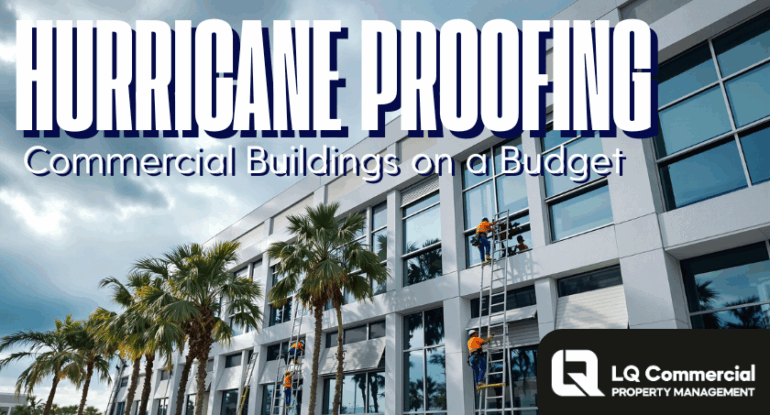
You can hurricane-proof a commercial building on a budget by prioritizing the envelope and operations. Start with the roof, doors, and glass; strap rooftop equipment; manage water flow; and prep a lean continuity plan. Tackle the highest-risk, lowest-cost fixes first, then phase larger upgrades for Florida’s wind zones and local codes.
Start where buildings are the most likely to sustain damage in a storm: Roof, Doors, and Glass. The cheapest insurance is shoring up the weak spots that usually fail first.
The Roof: Annual roof inspections catch lifted edges, cracked flashings, and loose fasteners before wind does. This includes your drainage system. Make sure it is clear of all debris.
In Tampa, a retail center cut losses dramatically just by resecuring perimeter metal and sealing penetrations – hundreds spent, thousands saved. If the roof is aging, budget for a nail-base or cover-board upgrade and a secondary water barrier when you re-roof.
Check the Doors: Reinforce double doors with surface bolts and heavy-duty threshold anchors. Replace worn hinges and panic hardware. A 150 wind−rated latch can outperform a $1,500 repair.
Glass: For storefronts, removable corrugated metal panels or polycarbonate panels often beat full impact glazing on cost. Note: Security film helps with shards but isn’t a substitute for windborne-debris-rated systems.
Quick checklist (15-minute walk):
- – Tug test the perimeter roof metal and check for gaps
- – Verify all exterior doors latch cleanly and fully
- – Measure storefront spans to price removable panels
- – Photograph existing conditions for insurance and quotes
Tame the Wind Without Blowing Away Your Budget
Affordable wind mitigation is about fastening and redundancy.
Details and examples:
- – Opening protection, fast: Track-and-panel shutters or code-rated fabric screens can be installed in phases, the main entrance and largest panes first. An Orlando office condo phased panels over three quarters, starting with the lobby and server room.
- – Door hardware that matters: Add three-point locks or surface bolts to double-leaf aluminum doors; install wind pins.
- – Anchors and signage: Replace rusted sign supports and add breakaway connections. Nothing ruins a façade like your own sign turned into a sail.
Step-by-step to spec the right shutter/panel:
- 1. Identify exposure (corner units and end bays get more wind).
- 2. Prioritize the largest panes and egress doors.
- 3. Choose a system (corrugated metal, polycarbonate, or fabric) based on weight, storage, and who will deploy it.
- 4. Confirm Florida approvals and local requirements.
- 5. Train staff; label panels and fastener sets.
Keep Water Out, Keep Lights on
Wind gets the headlines; water and power outages drain your cash flow.
- – Flood entry points: Use modular door dams or quick-deploy water-activated barriers for low thresholds and dock doors.
- – Drainage maintenance: Clean all gutters, scuppers, and downspouts yearly before June and again mid-season. Verify downspouts discharge away from entrances; extend with temporary leaders during storm warnings.
- – Backflow and pumps: Install backflow preventers on floor drains in flood-prone zones. Add battery backups for sump pumps.
- – Power continuity: Install a manual transfer switch and pre-wire for a portable generator sized for life-safety lighting, POS, routers, and refrigeration. Add small UPS units to bridge short outages.
Secure All Rooftop Items
Rooftop equipment becomes debris if you don’t tie it down.
- – HVAC and curb rails: Add manufacturer-approved tie-down kits and seismic/wind restraints. Check that vibration isolators have restraint cables or snubbers.
- – Loose items: Satellite dishes, exhaust caps, and ladder cages need proper bracing. Remove abandoned equipment.
- – Parapets and flashing: Seal joints and secure coping; wind loves edges. In Naples, a simple coping reattachment stopped chronic leaks after summer squalls.
- – Lighting and signage: Verify pole bases, tighten hardware, and replace corroded anchors with stainless steel where appropriate.
People, Paperwork, and Payback
A plan you can run in 60 minutes beats a binder you never open.
Operations essentials for managers in Naples, Orlando, Tampa, and Fort Myers:
- – Storm roles and timing: Who calls vendors? Who deploys panels? Who photographs pre- and post-storm conditions?
- – Vendors: Pre-negotiate with roofers, glazing crews, and debris removal teams. Put them in your call tree.
- – Photo inventory: Document every façade, roof zone, and interior mechanical space – store in the cloud plus one offline copy.
- – Tenant coordination: Share a simple checklist and panel-deployment guide. Clarify who handles interior prep.
- – Insurance and credits: Ask your agent about commercial wind mitigation credits after completing rated upgrades. Keep invoices, product approvals, and photos.
- – Budget phasing:
- – Do this week (low/no cost): Clean drains, tighten door hardware, label panels, update contacts, walk the roof.
- – Do this quarter (low-mid cost): Add door bolts, panel tracks, rooftop restraints, manual transfer switch.
- – Do this year (capex): Re-roof with secondary water barrier, upgrade to impact storefronts in phases, raise critical equipment if flooding is recurrent.
Compliance
Always follow the Florida Building Code and your local authority having jurisdiction. Use licensed contractors for structural or electrical work.
Hurricane-proofing a commercial property on a budget isn’t about perfection. It’s about smart sequencing. Secure the envelope, control water, protect your power, and train your employees. If you’d like a practical, phased plan tailored to your property, LQ Commercial Property Management can help source, schedule, and supervise upgrades.
If you want an experienced management team, LQ Commercial Property Management now proudly serves commercial clients in Orlando, Tampa, Naples, and Fort Myers, as well as many other areas of central and Southwest Florida. We handle everything from the first photo to the final check. To learn more, schedule a consultation online or call 239-333-3272 to get started.
Additionally we have also composed an article on exactly how to create a full emergency plan for your property!